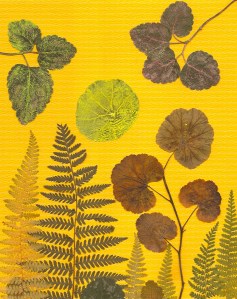
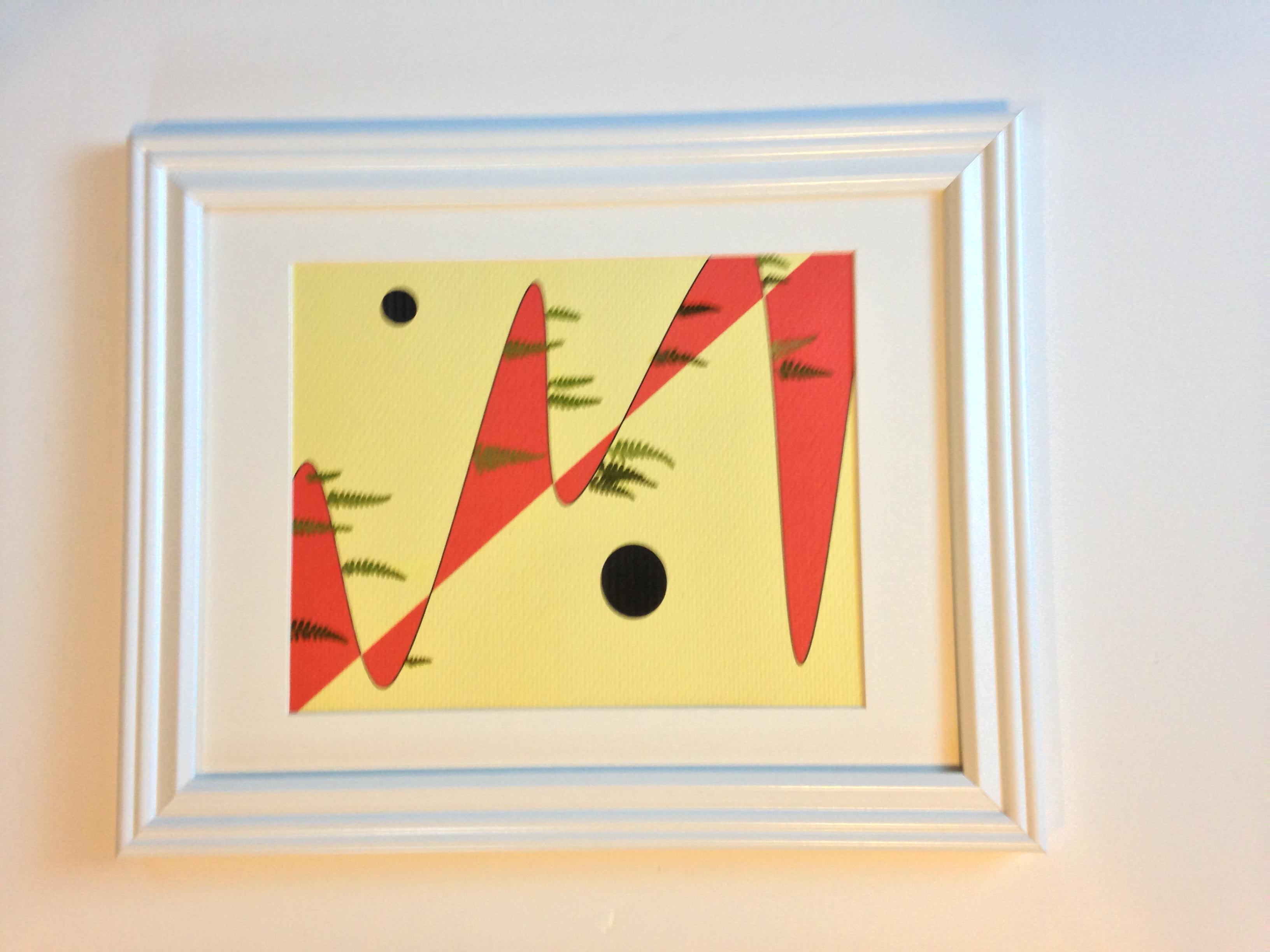
 Most varieties of ferns are lovely (I’m not a fan of staghorn) and they appear often in tradtional botanical compositions, but sometimes its fun to ask ‘when is a fern not a fern?” One answer is when its stem is removed and its individual leaves are displayed upright like denizens of an extra-terretrial formation, or maybe just on the distant rolling hills of an alternate universe.

Archives for category: Uncategorized

 Right now my gardens are covered by two feet of snow from the “Blizzard of 2013” How optimistic of the media to assume the worst is over in that way. The only casualty in my garden was my beautiful and very old Euonymous fortunei. It’s lying in its side pinned to the earth by heavy snow. We are holding out just a little hope that we can right it when the snow melts, but I see my garden through rose-colored glasses sometimes.
All I can do right now is make the best of it. The little flower bud clusters may or may not press well, but with the buds removed, the flower drupes make great little “trees” to support other types of leaves. Meanwhile, the Andromeda is evergreen so the little leaf rosettes which resemble Schefflera may just be candidates for pressing as well. Time will tell.
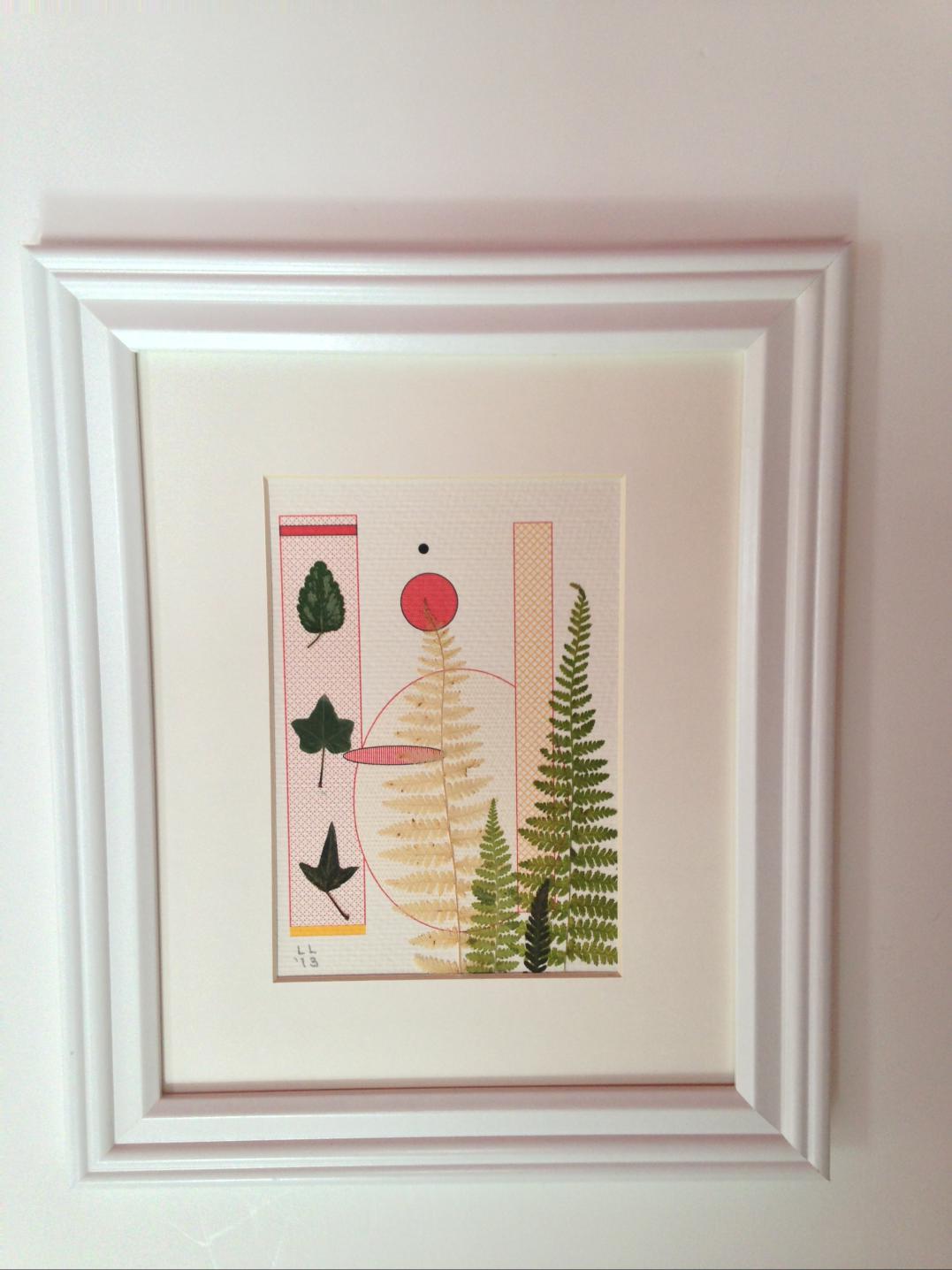
 One truth about the creative process is that as new ideas evolve old ones — even the best old ones — can fall into the shadows. Mindful of this, I have tried to keep all of the threads of this work growing even as new ones develop. I think of my pieces as either ‘straight botanicals’– meaning that, aside from providing the right background to compliment the plant, I keep myself out of the equation — or as botanical compositions.
Within the second category are a lot of sub-categories. For instance, some of my more contemporary graphics– especially those I use to support light grasses — are meant as the focal point of the composition with the grasses serving as enhancement only.
When I incorporate poetry or other text, on the other hand, I present it in a way that allows it to disappear into the background on first inspection. Check out some examples at my etsy shop by the same name as my blog.

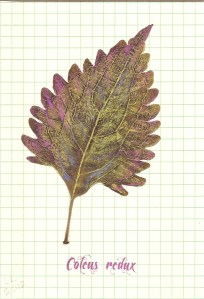
The graphics are the most fun. After working with some grasses I collected on a recent trip to South Beach (maybe the subject of a future post) I was inspired to work on some simple designs to display bits of ferns, pastel-enhanced little coleus leaves, and yellow archangel.
 I live in Stonington, Connecticut, a seaside fishing village where small gardens are big attractions. Mine is modest, at best, and may never land on the official tour, but it brings me joy.
In the past, winter gardening meant tending a few houseplants and the odd container garden that I found room to winter over in my kitchen.
More recently, I have extended my gardening through the winter months in a different way — I garden on paper.
When cool nights threaten, I collect a variety of foliage and fill weighted stacks of newsprint with the leaves of my plants — ivies, ferns, caladium, bleeding heart, nasturtiums, coleus and more. In a few weeks to a month, much of the material is dried and ready to work with. I love learning how different plants dry absent chemical treatment like silica gel.
Some, like caladium, soften to a silky texture and keep much of their color. Others, like geranium and sweet potato vine, dry to a rich brown. Still others, like Ginko, dry to yellows.

I know there are purists in the world who wouldn’t dream of altering a natural specimen, but some dried foliage just begs to be tinkered with.
If this is a pastime you share, I’d love to hear your ideas.